Enable Abilities, Transform Lives!

Over 100 million children with disabilities in low- and middle-income countries grow up without the care, education, or opportunities they need to thrive.

Enable Abilities, Transform Lives!

More than 10 million live with cerebral palsy—a condition that’s often preventable and manageable with the right support.

Enable Abilities, Transform Lives!

Millions of families face stigma, poverty, and isolation—left to cope without knowledge, resources, or hope.

At the Enablement Foundation, we believe that children and adults with disabilities have the same human rights as others—the right to grow, participate, and belong in their families and communities.

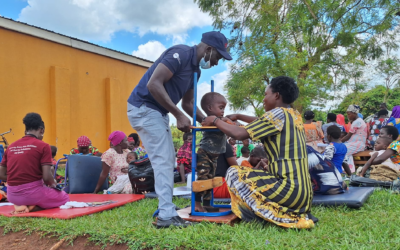
By applying the community-based rehabilitation (CBR) approach and partnering with strong local organisations, we develop sustainable, family-centered solutions that make lasting impact. Through capacity development, practical tools, skills training, and ongoing technical support, we enable our partners to help children with neurodevelopmental disabilities and their families improve daily functioning, build resilience, and thrive within their communities.

Together, we create lasting change—strengthening families, transforming lives, and promoting a future rooted in dignity, inclusion, and opportunity.

For more information read our strategic plan: Enable Abilities Transform Lives! 2025 – 2028 strategy.

For more information on our results, check our:
Latest News & Updates

Enablement Foundation Applies for CBF Recognition

Enablement Foundation Applies for CBF Recognition

Enablement Foundation (Stichting Enablement) has submitted its application for CBF Recognition, marking another important step in our development as a transparent and professional organisation. CBF Recognition is the independent quality mark for charities in the...

read more
The Village Effect

The Village Effect

It doesn't always start in a hospital. Sometimes it starts with a knock on a family's door. In many rural communities in Uganda, children with disabilities are still identified too late—or not at all. Distance, poverty, stigma and a lack of rehabilitation services...

read more